Current Research
"My current project, which provides the foundation for my dissertation, examines what happens to bureaucrats who plan and carry out state-sanctioned violence after a regime change, focusing on the transition from the Ottoman Empire to the Turkish Republic in the early 20th century.
Drawing on the scholarship of Holocaust scholars, I investigate what becomes of “desk murderers,” the bureaucrats who orchestrated mass violence but were not its public face, once the regime that enabled their actions collapses.
Using a large corpus of archival documents, that I collected and digitized, I trace the careers of Ottoman bureaucrats that began with their involvement in the atrocities of World War I under the Committee of Union and Progress (CUP) and paradoxically spanned into the Turkish Republic of 1923 despite its official repudiation of the CUP. I argue that bureaucrats’ expertise in organizing mass violence can render them valuable to successor regimes engaged in violent nation-building projects.”
Past Achievements and Department Support
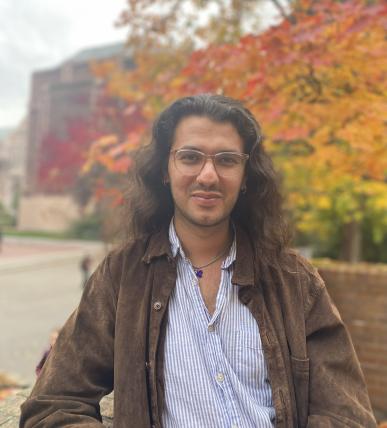
Bodrumlu’s research has benefited immensely from both fellowships and the gracious support of the Department of Political Science donors. They hit the ground running in their first year of the program and this funding support, including the Richard B. Wesley Endowed Graduate Fellow in Comparative Politics, enabled them to complete a project on bureaucratic purges entitled, When the Government Fires the State: How Bureaucratic Purges Weaken Public Service Capacity. This manuscript was subsequently awarded the Philo S. Bennett Prize for Best Graduate Student Paper on Free Government and is now under review at a peer reviewed journal.
Building on this strong foundation, Bodrumlu was able to utilize the research support to conduct a comprehensive archival study in Turkey to advance their current project. Throughout this process, they have relied on the steadfast support of their faculty advisor, Professor Asli Cansunar. Reflecting on this mentorship, Bodrumlu states, "Thanks to her mentorship, we now have a growing team working on Turkish politics and have also increased undergraduate interest in Middle Eastern politics within our department."